Technology is one of the fastest-growing industries in the world. From Artificial Intelligence to mobile apps, the demand for skilled IT professionals is increasing every year.
For students completing Intermediate (FSc, ICS, FA) or pursuing a Bachelor’s degree, choosing the right career in IT can feel overwhelming.
Common questions students ask:
Should I become a software developer?
Is Artificial Intelligence a better field?
Is Data Science the future?
Should I study Cybersecurity?
The good news is that the IT industry offers multiple high-paying career paths. This guide will help you understand those options and follow a clear roadmap to start your career in technology.
Why IT Is One of the Best Career Choices
Before choosing a specialization, it is important to understand why IT careers are so popular.
Benefits of choosing an IT career:
✔ High global demand
✔ Remote work opportunities
✔ High salary potential
✔ Opportunities to work internationally
✔ Continuous innovation and growth
Unlike many traditional careers, IT rewards skills more than degrees.
Many developers working in top companies today learned their skills through projects and online learning.
Top IT Career Paths Students Should Consider
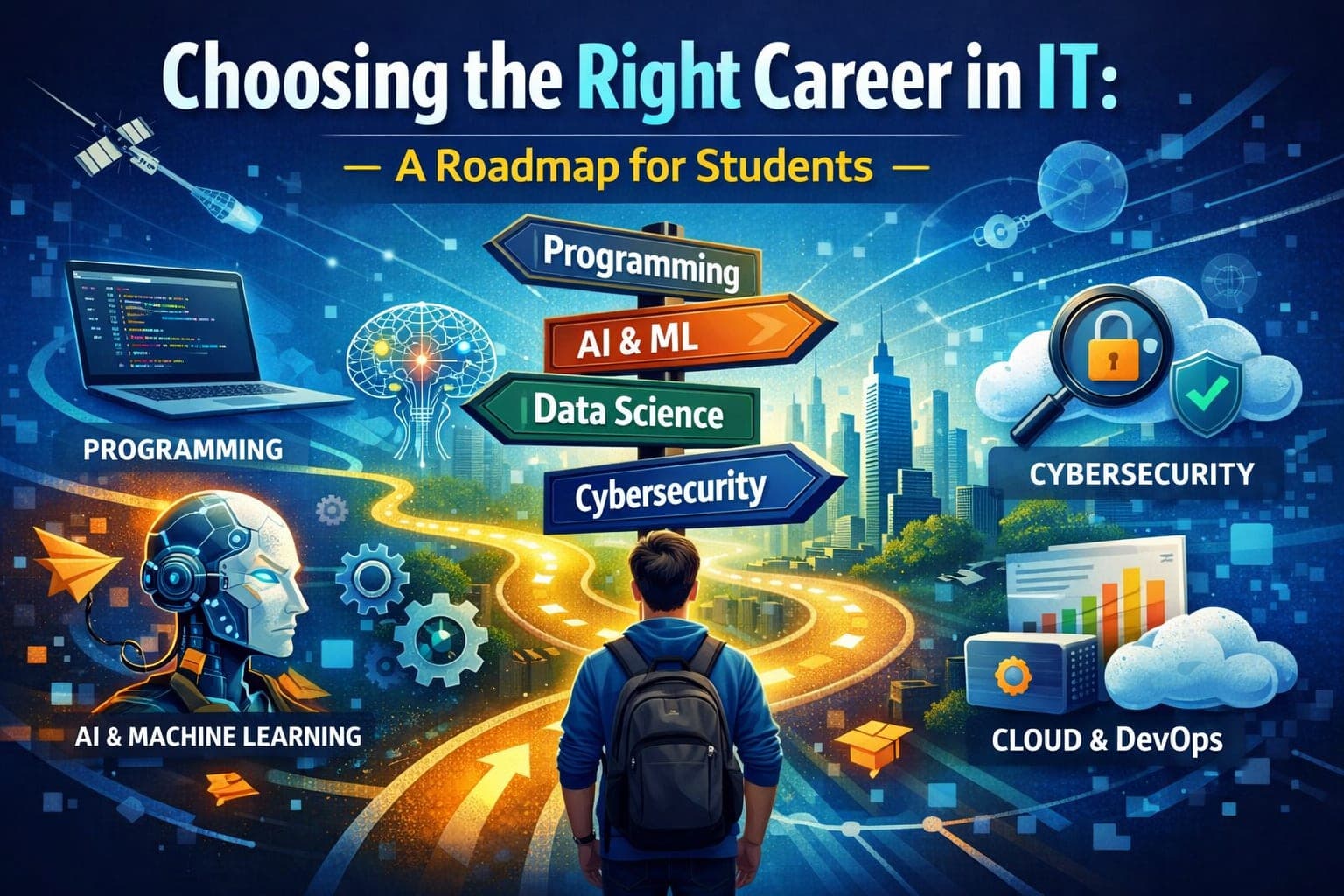
Below are some of the most popular IT career paths in 2026.
1. Software Development (Programming)
Software development is the foundation of the technology industry.
Software developers create applications, websites, and platforms used by millions of people every day.
Examples include:
Web applications
Mobile apps
SaaS platforms
Business software
Technologies used
JavaScript
Python
Java
C#
React
Node.js
Career roles
Frontend Developer
Backend Developer
Full Stack Developer
Mobile App Developer
Best for students who:
Enjoy solving logical problems
Like building digital products
Are curious about how software works
2. Artificial Intelligence and Machine Learning
Artificial Intelligence is transforming almost every industry including healthcare, finance, education, and transportation.
AI systems can analyze data, recognize images, understand language, and even generate content.
Examples include:
AI chatbots
Recommendation systems
Self-driving cars
Fraud detection systems
Technologies used
Python
TensorFlow
PyTorch
Scikit-learn
Career roles
AI Engineer
Machine Learning Engineer
NLP Engineer
Research Scientist
Best for students who:
Enjoy mathematics
Love experimentation and research
Want to work on cutting-edge technology
3. Data Science and Data Analytics
Data has become one of the most valuable assets for businesses.
Companies use data to make strategic decisions, predict trends, and improve products.
Data scientists analyze large datasets and extract meaningful insights.
Tools used
Python
SQL
Power BI
Tableau
Pandas
Career roles
Data Analyst
Data Scientist
Business Intelligence Analyst
Best for students who:
Enjoy statistics
Like analyzing patterns
Are interested in business decision making
4. Cybersecurity
Cybersecurity professionals protect systems from hackers and cyber attacks.
With increasing digital threats, cybersecurity has become one of the most critical fields in IT.
Skills required
Network security
Ethical hacking
Digital forensics
Risk management
Tools used
Kali Linux
Wireshark
Metasploit
Career roles
Security Analyst
Penetration Tester
Cybersecurity Engineer
5. Cloud Computing and DevOps
Modern applications run on cloud platforms like AWS, Azure, and Google Cloud.
DevOps engineers ensure that software systems run smoothly and efficiently.
Technologies used
Docker
Kubernetes
AWS
CI/CD pipelines
Career roles
DevOps Engineer
Cloud Engineer
Site Reliability Engineer
How Students Can Choose the Right IT Career
Choosing the right field depends on your interests and strengths.
Ask yourself these questions:
If you enjoy logical problem solving → Choose Programming
If you enjoy math and algorithms → Choose AI or Machine Learning
If you enjoy data analysis → Choose Data Science
If you enjoy security and hacking concepts → Choose Cybersecurity
If you enjoy systems and infrastructure → Choose Cloud Computing
Your interest is more important than following trends.
Step-by-Step IT Career Roadmap for Students
Regardless of your specialization, most IT careers follow a similar learning path.
Step 1: Learn Programming Fundamentals (3–6 Months)
Start with the basics of programming and computer science.
Learn:
Programming fundamentals
Data structures basics
Problem solving
Git and version control
Recommended languages:
Python (beginner friendly)
JavaScript (great for web development)
Goal:
Build a strong foundation in programming.
Step 2: Choose a Specialization (6–12 Months)
Once you understand programming basics, choose a specific field.
Example learning paths:
Web Development
Learn:
HTML
CSS
JavaScript
React
Node.js
Projects to build:
Portfolio website
Blog platform
E-commerce site
AI and Machine Learning
Learn:
Python
Machine learning algorithms
Data preprocessing
Neural networks
Projects to build:
Image classifier
Recommendation system
Chatbot
Data Science
Learn:
SQL
Data analysis
Visualization
Statistics
Projects to build:
Data dashboard
Sales prediction model
Step 3: Build Real Projects
Projects are more valuable than certificates.
Employers prefer candidates who can demonstrate real skills.
Examples of good portfolio projects:
Full-stack web application
AI chatbot
Real-time chat system
Data analytics dashboard
Publishing projects on GitHub greatly increases your chances of getting hired.
Step 4: Build an Online Portfolio
Students should create an online presence early.
Your portfolio should include:
GitHub profile
Personal website
Technical blog
LinkedIn profile
These platforms help you:
Showcase projects
Build credibility
Connect with industry professionals
The Future of IT Careers
The technology industry is evolving rapidly.
Fields expected to grow significantly include:
Artificial Intelligence
Cloud Computing
Cybersecurity
Data Science
Students who combine programming skills with modern technologies will have the best career opportunities.
Final Advice for Students
Many students worry about choosing the perfect IT career.
But the truth is:
Your first specialization does not have to be permanent.
Many professionals change their focus during their careers.
For example:
Web Developer → Backend Engineer → AI Engineer
The most important thing is to start learning and building projects as early as possible.
Final IT Career Roadmap Summary
Students can follow this simple roadmap:
1️⃣ Learn programming fundamentals
2️⃣ Explore different IT fields
3️⃣ Choose one specialization
4️⃣ Build real projects
5️⃣ Publish your work online
6️⃣ Keep learning new technologies
If you follow this roadmap for 12–18 months, you can build strong technical skills and prepare for a successful career in the technology industry.
Tagged in