Introduction: A New Chapter in Middle East Conflict
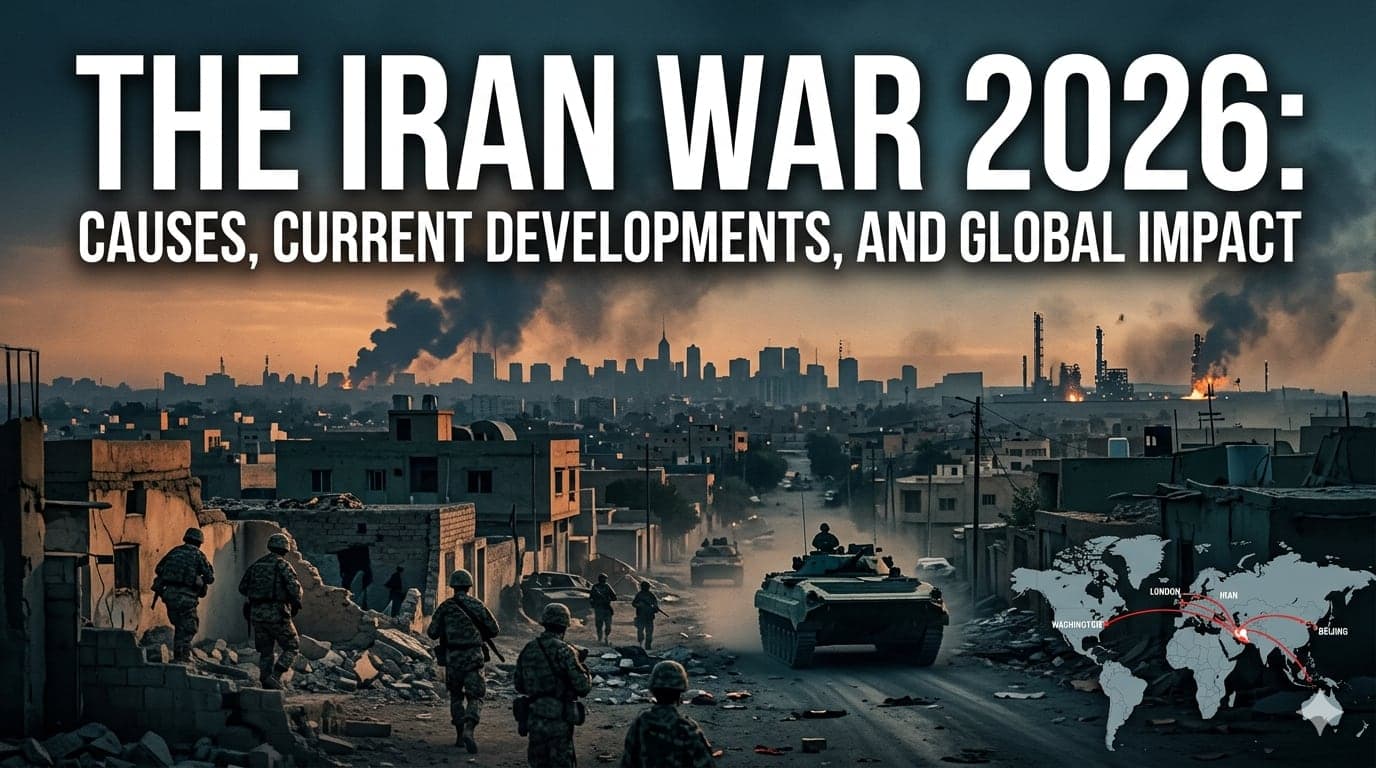
In late February 2026, a major armed conflict began when the United States and Israel launched surprise airstrikes against targets across Iran, marking a dramatic escalation in the long‑standing tensions between Tehran, Washington, and Jerusalem.
The strikes killed Iran’s Supreme Leader Ali Khamenei along with several senior officials and caused significant civilian casualties. Iran quickly retaliated with waves of missile and drone attacks targeting Israeli cities, U.S. military bases, and allied nations in the region.
What started as part of the broader Iran–Israel conflict has now evolved into a full‑blown war with deep political, economic, and humanitarian ramifications.
Root Causes: From Decades‑Long Strain to Unchecked Escalation
The Iran–Israel rivalry dates back to 1979 following the Iranian Revolution, with decades of indirect hostilities and proxy engagements across the Middle East. In 2024 and 2025, direct missile exchanges and military clashes foreshadowed an expanded conflict.
Leading up to the 2026 war, Iran faced massive nationwide protests over economic hardship and political repression. The government’s brutal crackdown on demonstrators worsened internal instability, even as talks with Washington faltered.
When diplomatic negotiations collapsed in February 2026, the United States and Israel initiated large coordinated air campaigns against Iranian strategic targets.
Current Developments: Day‑to‑Day Progress of the War
As of late March 2026, several key developments shape the trajectory of the Iran war:
1. Intensified Military Exchanges
Both sides continue to strike military and civilian infrastructure. Iran has launched missiles and drones against Israel and U.S. bases, while U.S. and Israeli forces have conducted sustained bombardments across Iranian nuclear and industrial complexes.
Iran’s parliament speaker, Mohammad‑Bagher Ghalibaf, has accused the U.S. of preparing a ground invasion — a claim Tehran says will be met with force — even as Washington publicly frames parts of the conflict as negotiable.
2. Regional Expansion and Spillover
The conflict is no longer confined to Iran and Israel. Yemen’s Houthi militias have participated, and rocket and drone strikes have affected Gulf states including the UAE, Bahrain, Qatar, Oman, and Saudi Arabia, with civilian casualties reported.
Multiple countries in the region have seen airspace restrictions or military repositioning, reflecting the widening nature of the war.
3. Diplomatic Engagements and Peace Efforts
Despite ongoing hostilities, significant diplomatic efforts are underway. Pakistan, Saudi Arabia, Turkey, and Egypt have held talks in Islamabad aimed at de‑escalation and conflict resolution.
Meanwhile, the U.S. has reportedly offered a 15‑point peace plan intended to end hostilities, though Tehran has shown skepticism.
Economic Impact: Global Shock Waves
The war’s effects are already rippling through the global economy. With Iran closing the Strait of Hormuz — a critical route for about a quarter of the world’s oil supply — and significant infrastructure damage throughout the region, global energy markets have seen historic disruption.
The International Monetary Fund (IMF) warns that conflict‑linked energy shocks, rising inflation, and tighter financial conditions could dampen economic recoveries worldwide, particularly in vulnerable nations.
Humanitarian and Civil Impact
Beyond military and economic dimensions, the conflict has sparked massive evacuations of civilians, foreign nationals, and diplomatic staff across the Middle East due to safety concerns and disrupted transport routes.
International human rights organizations have also raised alarms about attacks on civilian and economic targets, warning of grave risks to non‑combatants.
Conclusion: What the Future Holds
The Iran war of 2026 stands as a watershed moment in Middle Eastern geopolitics. As military actions intensify and diplomatic efforts continue, the world watches closely. The conflict’s outcome remains uncertain — but one thing is clear: its effects will be felt far beyond the region, shaping energy markets, global alliances, and international security for years to come.