Part 1
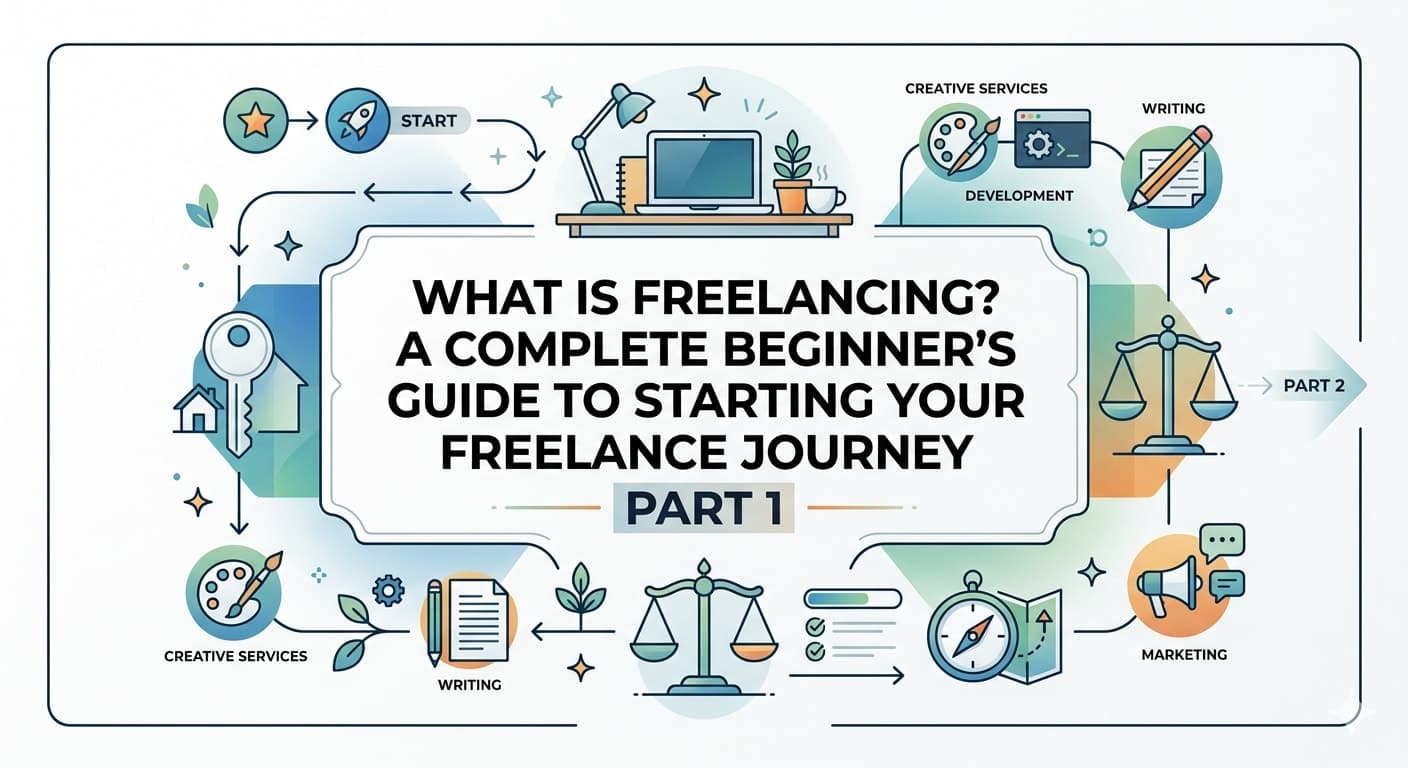
What Is Freelancing? A Complete Beginner's Guide to Starting Your Freelance Journey
Part 2
Skills You Can Sell as a Freelancer (Even With No Experience)
Part 3
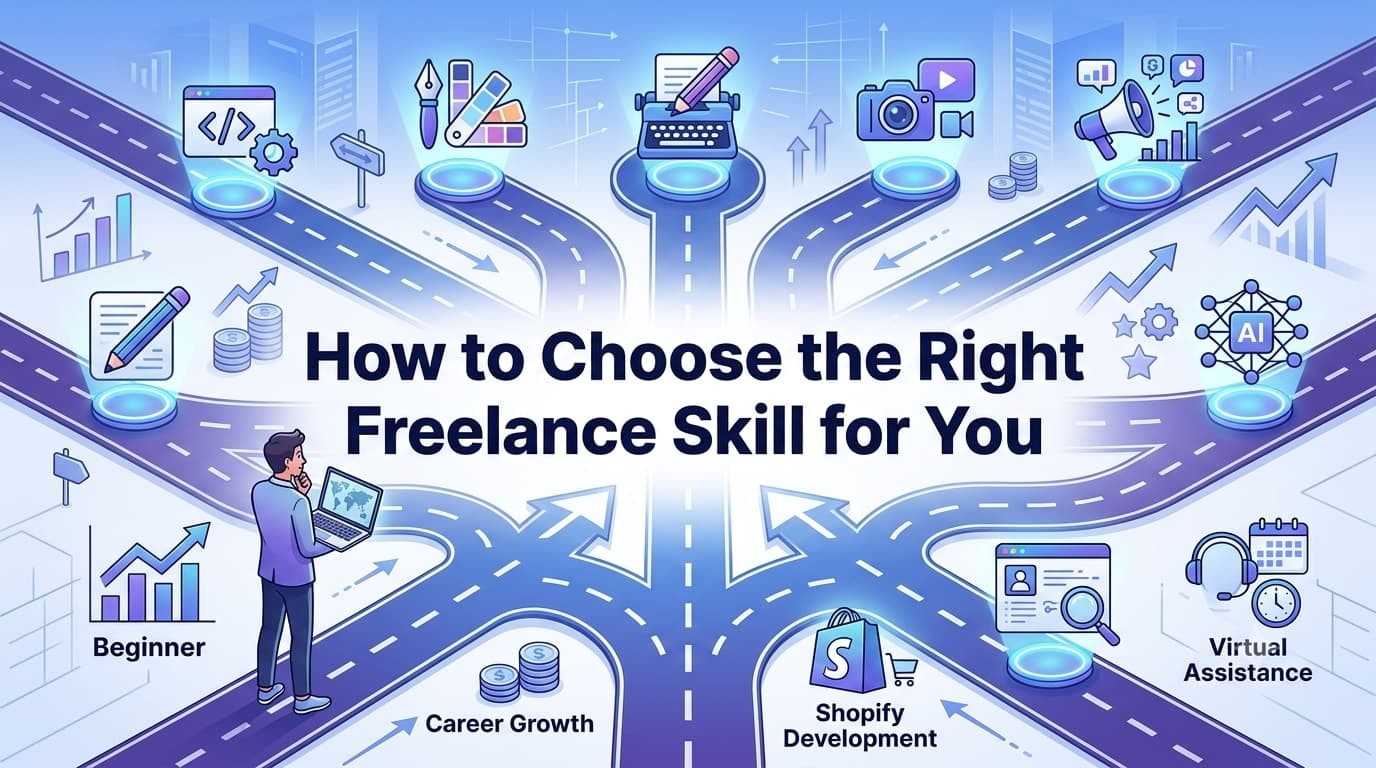
How to Choose the Right Freelance Skill for You
Part 4
Best Freelancing Platforms for Beginners
Part 5
How to Create a Winning Fiverr Profile
Part 6
How to Create an Upwork Profile That Gets Approved
Part 7
How to Get Your First Freelance Client
Part 8
How to Build Your Portfolio Without Clients
Part 9
How Much Should Beginners Charge?
Part 10
Common Freelancing Mistakes Beginners Make
Part 11
How to Communicate With Clients Professionally
Part 12
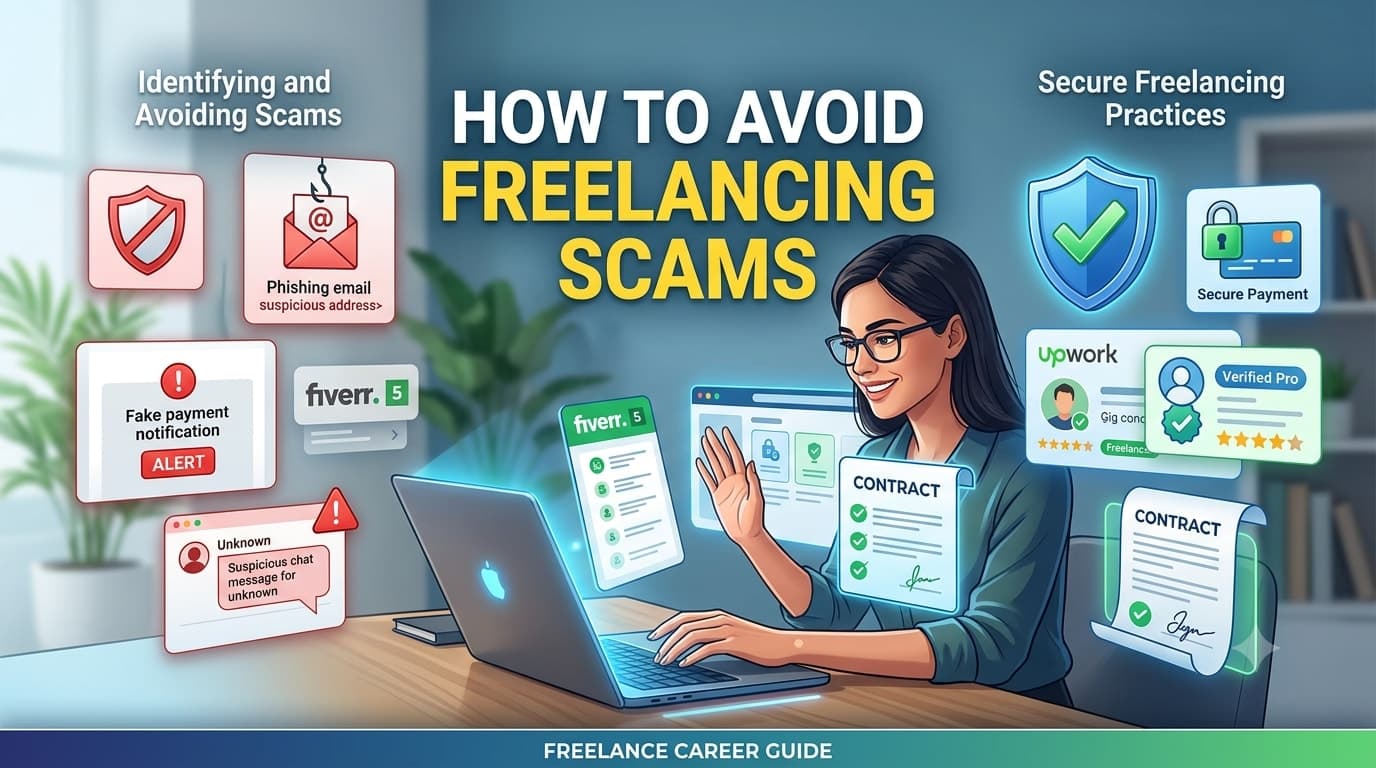
How to Avoid Freelancing Scams
Part 13
How to Get Repeat Clients
Part 14
How to Scale From Freelancer to Agency
Part 15
Passive Income Ideas for Freelancers
Welcome back to the Learn Freelancing for Beginners series!
One of the biggest concerns for new freelancers isn't finding work—it's avoiding scams.
Unfortunately, scammers know that beginners are often eager to land their first client. They take advantage of that excitement by offering fake jobs, promising unusually high payments, requesting free work, or trying to move conversations away from trusted freelance platforms.
The good news is that most freelancing scams follow predictable patterns.
Once you understand the warning signs, they're much easier to recognize and avoid.
Whether you're using Fiverr, Upwork, Freelancer.com, or working directly with clients, knowing how to protect yourself is just as important as having technical skills.
In this guide, you'll learn about the most common freelancing scams, how to identify red flags, best practices for protecting your work and payments, and what to do if you encounter a suspicious client.
A few minutes of caution today can save you from losing time, money, and valuable opportunities in the future.
Let's get started.
Why Freelancers Become Scam Targets
Scammers usually look for people who are inexperienced and eager to get hired quickly.
New freelancers often:
Want their first project as soon as possible.
May not understand how freelance platforms work.
Feel pressured to accept offers immediately.
Hesitate to question suspicious requests.
Scammers use this urgency to their advantage.
They may promise unusually high payments, create fake deadlines, or pressure you into making quick decisions before you've had time to think.
The best way to stay safe is to slow down and evaluate every opportunity carefully.
Professional clients respect freelancers who ask questions and follow a proper process.
If an offer seems too good to be true, it deserves a closer look.
Common Freelancing Scams
Understanding how scammers operate is the first step toward protecting yourself.
Here are some of the most common scams that beginner freelancers encounter.
Scam #1: Requests for Free Sample Work
Some clients ask freelancers to complete a "small test" before hiring them.
While paid skill assessments can sometimes be legitimate, be cautious if the client asks you to complete real project work without compensation.
For example, a client might say:
"Design our homepage first, and if we like it, we'll hire you."
Or:
"Write one full article so we can evaluate your writing."
The problem is that some scammers collect free work from multiple freelancers without hiring anyone.
How to Stay Safe
Offer to share your portfolio instead.
If a test is necessary, keep it short.
Ask whether the assessment is paid.
Never complete a significant amount of unpaid work for an unknown client.
Professional clients understand that your time has value.
Scam #2: Fake Payment Confirmation
This is one of the most common scams on freelance platforms.
A scammer claims they've already sent your payment and may even provide a fake email or screenshot that appears to confirm it.
They then pressure you to start working immediately.
Always remember:
Never rely on screenshots or emails claiming payment has been made.
Only trust the payment status shown inside the official freelance platform or your verified payment account.
How to Stay Safe
Verify payments through the platform itself.
Ignore unofficial payment confirmation emails.
Don't begin work until payment has been properly confirmed according to the platform's process.
Scam #3: Requests to Communicate Outside the Platform
A client may quickly ask you to move the conversation to:
WhatsApp
Telegram
Personal email
Discord
Skype
Other messaging apps
Sometimes this request is harmless.
However, scammers often do this to avoid platform monitoring and protection.
On marketplaces like Fiverr and Upwork, keeping communication on the platform helps protect both freelancers and clients.
How to Stay Safe
Whenever possible:
Keep project discussions on the platform.
Follow the platform's communication guidelines.
Move to external communication only when it's appropriate and allowed by the platform.
Doing so helps preserve evidence if any dispute arises.
Scam #4: Overpayment Scam
In this scam, a client intentionally claims to have paid you more than agreed.
They may say:
"I accidentally sent $800 instead of $500. Please refund the extra $300."
Later, you discover that the original payment was fake, reversed, or fraudulent.
You end up losing the money you refunded.
How to Stay Safe
Never send refunds based solely on client requests.
Verify all payments through the official payment provider.
If something seems unusual, contact the platform's support team before taking any action.
Scam #5: Unrealistically High Offers
Imagine seeing a job posting like this:
Beginner experience required.
Two hours of work.
Pays $5,000.
Sounds amazing—but also unrealistic.
Scammers often use unusually high payments to create excitement and encourage freelancers to ignore warning signs.
If an offer seems far above the market rate, ask yourself:
Does the project justify this budget?
Does the client have a verified history?
Are they pressuring me to act quickly?
Professional clients value quality, but legitimate offers are generally aligned with the project's scope and complexity.
Scam #6: Fake Client Profiles
Some scam accounts appear convincing at first glance but have little or no genuine history.
Warning signs include:
Newly created accounts.
No verified payment method.
No previous reviews.
Incomplete profile information.
Generic project descriptions.
Poor communication.
One warning sign alone doesn't necessarily mean the client is dishonest, but several together should encourage you to proceed carefully.
Scam #7: Phishing Links and Fake Login Pages
Some scammers send links claiming to be:
Project documents.
Payment confirmations.
Verification forms.
Portfolio reviews.
The link actually leads to a fake login page designed to steal your account credentials.
How to Stay Safe
Before clicking any link:
Check the website address carefully.
Look for spelling mistakes in the domain name.
Avoid entering your login credentials on unfamiliar websites.
Enable two-factor authentication whenever possible.
Protecting your freelance accounts is just as important as protecting your earnings.
Red Flags Every Freelancer Should Know
While every situation is different, these warning signs deserve extra attention.
Be cautious if a client:
Promises unusually high payments for simple work.
Refuses to discuss project details.
Pressures you to start immediately.
Wants free work before hiring.
Asks you to leave the freelance platform without a clear reason.
Requests sensitive personal or financial information unrelated to the project.
Avoids using secure payment methods.
Uses poor communication or inconsistent information.
One red flag doesn't always mean a scam.
However, if you notice several of these signs together, take extra time to verify the opportunity before moving forward.
Protect Your Payments
Getting paid securely is one of the most important parts of freelancing.
To reduce payment risks:
Use trusted freelance platforms whenever possible.
Follow the platform's payment process.
Keep records of project discussions and deliverables.
Confirm payment before delivering final work, where appropriate and consistent with the platform's workflow.
Save invoices and payment confirmations for your records.
Good payment habits protect both your income and your professional reputation.
Safe Communication Practices
Good communication isn't just about professionalism—it's also one of your best defenses against scams.
Whether you're working through Fiverr, Upwork, or directly with a client, following safe communication practices can help protect both your work and your payments.
Here are some best practices to follow.
Keep Important Conversations in Writing
Whenever possible, keep project discussions in written form.
This creates a record of:
Project requirements
Deliverables
Deadlines
Pricing
Revision requests
Client approvals
If you have a phone or video call, follow up with a short written summary.
For example:
"Thanks for today's meeting. Just to confirm, we'll be developing a five-page responsive website with a contact form and basic SEO optimization. The project deadline is July 30, and two rounds of revisions are included."
This simple habit prevents misunderstandings and provides useful documentation if questions arise later.
Don't Share Sensitive Personal Information
Clients may need your professional details, but they should never require sensitive personal information unrelated to the project.
Avoid sharing:
Banking passwords
One-time verification codes (OTP)
Personal identity documents unless legally required
Credit card details
Login credentials for your freelance accounts
Only share information that is genuinely necessary to complete the project.
Protect Your Freelance Accounts
Your Fiverr, Upwork, and other freelance accounts are valuable business assets.
To keep them secure:
Use strong, unique passwords.
Enable two-factor authentication (2FA).
Never share your login credentials.
Log out from public computers.
Regularly review account activity.
A few minutes spent improving account security can prevent significant problems later.
Should You Work Outside Freelance Platforms?
Many beginners eventually receive offers to work directly with clients outside freelance marketplaces.
While direct clients can be a great source of long-term work, beginners should proceed carefully.
Working through established freelance platforms provides several benefits:
Secure payment systems
Project records
Dispute resolution
Verified client history
Protection for both parties
If you decide to work with direct clients, make sure you have:
A clear written agreement.
Defined payment terms.
Agreed project scope.
A professional invoicing process.
A trusted payment method.
Never feel pressured to leave a platform simply because a client requests it.
Take time to evaluate the situation carefully.
What to Do If You Suspect a Scam
Sometimes something simply doesn't feel right.
Trust your instincts.
If you believe a client may be attempting to scam you:
Stop Before Taking Further Action
Don't rush into sending files, sharing personal information, or completing additional work.
Take a moment to review the situation carefully.
Ask Questions
Professional clients are usually happy to clarify requirements.
If someone becomes defensive or refuses to answer reasonable questions, consider it a warning sign.
Verify Information
Double-check:
Payment status
Client profile
Company information (if applicable)
Website addresses
Email domains
Never rely solely on screenshots or claims made in chat messages.
Report Suspicious Activity
If you're using a freelance platform and believe a client is violating its rules, use the platform's reporting tools.
Reporting suspicious accounts helps protect other freelancers as well.
Walk Away If Necessary
Remember:
Not every opportunity is worth pursuing.
If something feels suspicious, declining the project is often the safest decision.
There will always be legitimate clients looking for skilled freelancers.
Protecting your reputation and your time is more valuable than chasing every opportunity.
Freelance Safety Checklist
Before accepting any freelance project, review this checklist.
✔ The client has explained the project clearly.
✔ The payment process is transparent.
✔ I understand the project requirements.
✔ I am not being pressured to make immediate decisions.
✔ I am not being asked to complete significant unpaid work.
✔ The communication feels professional and consistent.
✔ The payment method is secure.
✔ I have a written record of important project discussions.
✔ I am following the platform's policies and guidelines.
✔ I feel comfortable accepting this project.
If you can't confidently check several of these boxes, take more time to evaluate the opportunity before moving forward.
Key Takeaways
Freelancing can be a rewarding career, but protecting yourself from scams is just as important as finding clients.
Here are the key lessons from this guide:
Learn to recognize common freelance scams before accepting projects.
Be cautious of requests for large amounts of unpaid sample work.
Verify payments through official platforms or trusted payment providers.
Avoid sharing sensitive personal or financial information.
Keep important project discussions documented.
Be careful when clients pressure you to move conversations off freelance platforms.
Trust your instincts if something feels suspicious.
Don't hesitate to decline projects that seem unsafe.
Report suspicious activity to help protect other freelancers.
Most professional clients are honest and respectful. By staying informed and following safe working practices, you can confidently focus on building your freelance career while minimizing unnecessary risks.
Frequently Asked Questions
Are freelancing scams common?
Scams do exist, especially on the internet, but most freelance projects are legitimate. Learning to recognize common warning signs significantly reduces your chances of becoming a victim.
Is it safe to work on Fiverr and Upwork?
Yes. Established platforms like Fiverr and Upwork provide features such as secure payments, dispute resolution, and account verification that help protect both freelancers and clients. Following the platform's guidelines further improves your safety.
Should I complete free sample work?
Be cautious.
Small skills assessments may sometimes be reasonable, but avoid completing substantial unpaid work that provides real value to the client before a contract or agreement is in place.
What should I do if a client asks to communicate outside the platform?
Understand the platform's policies first. If the request seems intended to bypass platform protections or makes you uncomfortable, politely continue the conversation through the platform or decline the opportunity.
What if I've already shared some work and suspect a scam?
Stop providing additional work, gather your communication records, and report the issue through the freelance platform if applicable. If you're working independently, document everything and avoid sending any more deliverables until the situation is resolved.
Continue Learning
📘 Learn Freelancing for Beginners Series
✅ Part 1: What Is Freelancing? A Complete Beginner's Guide
✅ Part 2: Skills You Can Sell as a Freelancer (Even With No Experience)
✅ Part 3: How to Choose the Right Freelance Skill for You
✅ Part 4: Best Freelancing Platforms for Beginners
✅ Part 5: How to Create a Winning Fiverr Profile
✅ Part 6: How to Create an Upwork Profile That Gets Approved
✅ Part 7: How to Get Your First Freelance Client
✅ Part 8: How to Build Your Portfolio Without Clients
✅ Part 9: How Much Should Beginners Charge?
✅ Part 10: Common Freelancing Mistakes Beginners Make
✅ Part 11: How to Communicate With Clients Professionally
Final Thoughts
Freelancing gives you the freedom to work with clients from around the world, but that freedom also comes with the responsibility of protecting yourself and your business.
The vast majority of clients are genuine professionals looking for talented freelancers. However, taking a few simple precautions can save you from unnecessary stress, financial loss, and wasted time. Don't let the excitement of landing a project cause you to overlook warning signs.
Develop the habit of asking questions, verifying information, documenting important conversations, and following secure payment practices. These habits will not only help you avoid scams but also make you a more professional and confident freelancer.
As your experience grows, spotting suspicious situations will become second nature. Until then, remember that it's always better to miss one questionable opportunity than to become a victim of a scam.
In the next part of this series, we'll explore how to get repeat clients and long-term projects, helping you build a more stable and sustainable freelance business.
Need Help? Let's Connect!
Your freelancing journey doesn't have to be a solo one. Whether you're choosing your first freelance skill, creating your portfolio, finding clients, setting your prices, improving client communication, or learning how to stay safe online, we're here to help.
📩 Subscribe to Stay Updated
Don't miss the next article in our Learn Freelancing for Beginners series.
Subscribe to our blog and be the first to receive new articles, practical freelancing tips, and step-by-step guides delivered straight to your inbox. As the series grows, you'll have a complete roadmap to help you build a successful freelance career.
💬 Have a Question? We'd Love to Help
If you have any questions or need guidance at any stage of your freelancing journey, simply visit our Contact Us page and send us your query.
We personally read every message and do our best to respond to all genuine questions. Whether your question is about freelance platforms, client safety, pricing, proposals, portfolios, finding clients, or growing your freelance business, we'll be happy to help.
🤝 Connect With Us on LinkedIn
Follow us on LinkedIn for regular freelancing tips, AI tools, web development insights, career advice, and updates whenever a new article in this series is published.
If you found this article helpful, consider sharing it with your friends, classmates, colleagues, or anyone planning to start freelancing. It could help them recognize scams early and build their freelance career with greater confidence.