Part 1
What Is Freelancing? A Complete Beginner's Guide to Starting Your Freelance Journey
Part 2
Skills You Can Sell as a Freelancer (Even With No Experience)
Part 3
How to Choose the Right Freelance Skill for You
Part 4
Best Freelancing Platforms for Beginners
Part 5
How to Create a Winning Fiverr Profile
Part 6
How to Create an Upwork Profile That Gets Approved
Part 7
How to Get Your First Freelance Client
Part 8
How to Build Your Portfolio Without Clients
Part 9
How Much Should Beginners Charge?
Part 10
Common Freelancing Mistakes Beginners Make
Part 11
How to Communicate With Clients Professionally
Part 12
How to Avoid Freelancing Scams
Part 13
How to Get Repeat Clients
Part 14
How to Scale From Freelancer to Agency
Part 15
Passive Income Ideas for Freelancers
Part 16
AI Tools Every Freelancer Should Use
Part 17
How to Manage Time as a Freelancer
Part 18
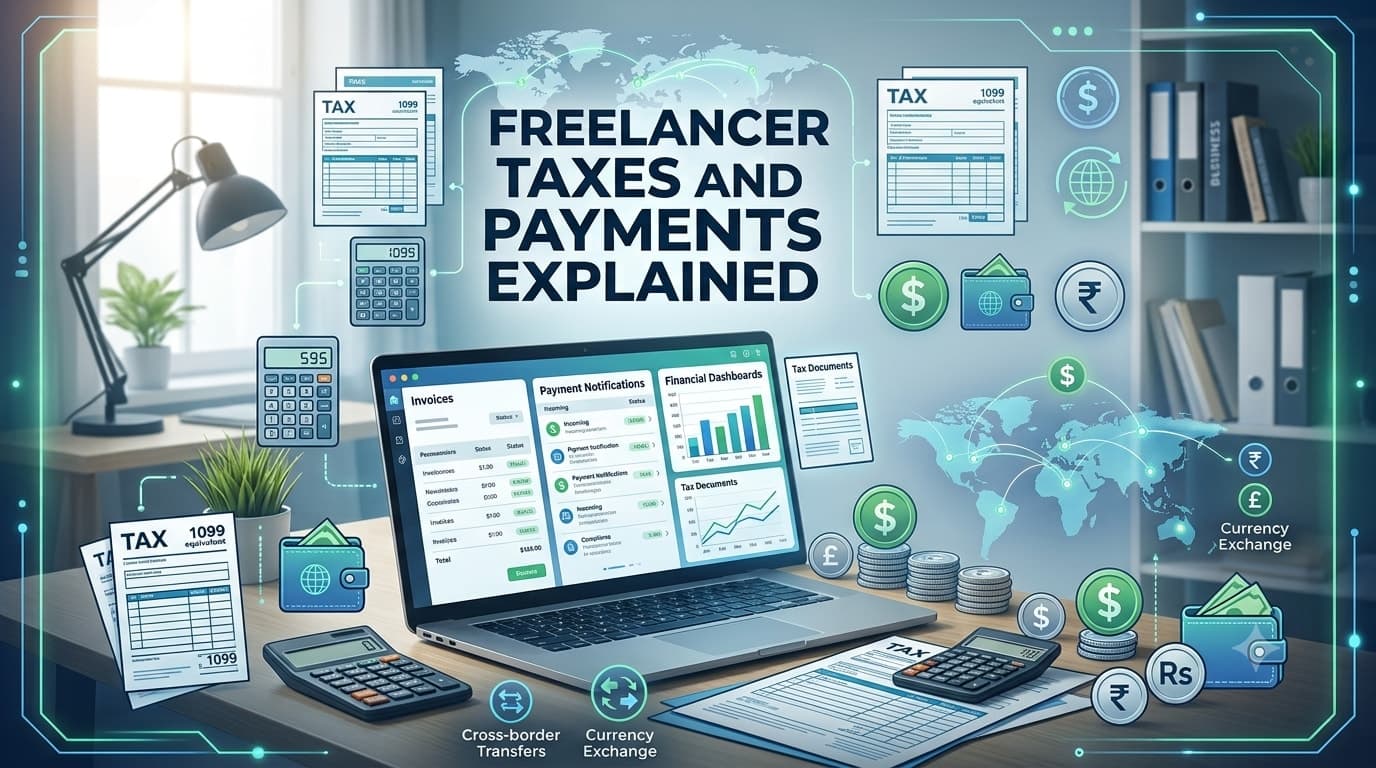
Freelancer Taxes and Payments Explained
Part 19
How to Build a Personal Brand as a Freelancer
Part 20
From Beginner to Full-Time Freelancer: A Step-by-Step Roadmap
Welcome back to the Learn Freelancing for Beginners series!
Getting your first freelance client is exciting.
Receiving your first payment is even more exciting.
But many beginners quickly realize that earning money is only part of running a successful freelance business.
Questions like these often come up:
How should clients pay me?
Do I need to send invoices?
Should I keep records of my income?
Do freelancers pay taxes?
What if my client is in another country?
Which payment platform should I use?
How do exchange rates affect my earnings?
Understanding taxes and payments may not be the most exciting part of freelancing, but it's one of the most important.
Managing your finances properly helps you:
Build a professional reputation.
Avoid payment disputes.
Prepare for tax obligations.
Track your business growth.
Make smarter financial decisions.
The good news is that you don't need to be an accountant to understand the basics.
In this guide, we'll explain how freelancers typically receive payments, create invoices, manage financial records, and understand the general tax considerations. We'll also provide a brief overview for freelancers in Pakistan, India, the USA, and the UK.
Note: Tax laws vary by country and change over time. This article is intended for educational purposes only and should not be considered legal or tax advice. Always consult your local tax authority or a qualified tax professional for guidance specific to your situation.
Let's get started.
Why Financial Management Matters
Freelancing isn't just about delivering great work.
You're also responsible for managing your own business finances.
Unlike traditional employment, freelancers generally don't have an employer handling tax deductions, salary payments, or expense tracking.
This means you should develop good financial habits from the beginning.
Good financial management helps you:
Track your earnings.
Understand your business performance.
Prepare for tax obligations.
Avoid missed payments.
Build trust with clients.
Make informed pricing decisions.
Even if you're only working with one or two clients, staying organized now will save you time and stress as your freelance business grows.
Common Payment Methods for Freelancers
One of the first decisions every freelancer needs to make is how to receive payments.
The best payment method depends on where you live, where your clients are located, the currencies you work with, and the platforms you use.
Here are some of the most common options.
Freelance Marketplace Payments
If you work through platforms like Fiverr or Upwork, payments are typically processed through the platform.
These platforms usually:
Collect payment from the client.
Hold funds during the protection period.
Release payments once the work is approved.
Allow you to withdraw your earnings using supported payment methods.
Using platform payments can provide additional security for both freelancers and clients.
Direct Bank Transfer
Many businesses prefer paying freelancers directly to their bank accounts.
Bank transfers are:
Professional
Secure
Common for long-term clients
Suitable for larger payments
However, international transfers may involve:
Bank fees
Exchange rate differences
Longer processing times
Always confirm who is responsible for transfer fees before starting a project.
Payoneer
Payoneer is one of the most widely used payment platforms among freelancers working with international clients.
It offers features such as:
Receiving payments from global clients.
Withdrawing money to local bank accounts.
Multi-currency receiving accounts.
Marketplace integrations.
Many freelancers choose Payoneer because it supports payments from numerous countries and freelance platforms.
Wise
Wise (formerly TransferWise) is known for international money transfers with transparent fees and competitive exchange rates.
Freelancers often use Wise for:
Receiving international payments.
Holding multiple currencies.
Sending invoices.
Converting currencies.
If you frequently work with overseas clients, Wise can help reduce currency conversion costs.
PayPal
PayPal remains a popular payment option in many countries.
It offers:
Fast online payments.
Buyer and seller protection.
Easy invoice creation.
Support for international transactions.
Availability and supported features vary by country, so check whether PayPal fully supports receiving freelance payments where you live.
Other Payment Methods
Depending on your country and clients, you may also receive payments through:
Stripe
Local bank transfers
Wire transfers
Business payment gateways
Regional payment services
Discuss payment methods before beginning a project to avoid confusion later.
Create Professional Invoices
An invoice is a professional document requesting payment for completed work.
Even if your client doesn't ask for one, sending an invoice demonstrates professionalism and keeps your financial records organized.
A typical invoice should include:
Your name or business name.
Client's name.
Invoice number.
Invoice date.
Description of services.
Project amount.
Currency.
Payment method.
Payment due date.
Your contact information.
Keeping invoices organized also makes tax reporting much easier later.
Keep Track of Your Income
Many freelancers make the mistake of relying only on payment notifications from freelance platforms or bank statements.
Instead, maintain your own income records.
Track details such as:
Client name.
Invoice number.
Payment date.
Payment amount.
Currency.
Payment platform.
Exchange rate (if applicable).
Having organized records helps you:
Understand monthly income.
Prepare tax returns.
Identify late payments.
Monitor business growth.
Track Business Expenses
Freelancing often involves business-related expenses.
Examples include:
Software subscriptions.
Website hosting.
Domain names.
Internet bills.
Office equipment.
Laptop upgrades.
Online courses.
Marketing expenses.
Design assets.
Productivity tools.
Keeping expense records can help you better understand your business finances and, depending on your country's tax rules, some expenses may be deductible.
Always retain receipts and invoices for your business purchases.
Separate Business and Personal Finances
As your freelance income grows, consider separating your business and personal finances.
Many freelancers do this by:
Opening a dedicated business bank account (where available).
Using a separate payment platform.
Tracking business expenses independently.
Maintaining separate financial records.
Separating finances makes accounting simpler and provides a clearer picture of your business performance.
Understanding Freelancer Taxes
One of the biggest misconceptions among beginners is that freelance income is somehow exempt from taxes.
In most countries, freelance income is taxable, although the specific rules vary depending on your location and individual circumstances.
Generally, freelancers are responsible for:
Reporting their income.
Keeping financial records.
Paying any applicable taxes.
Following local business regulations.
Unlike traditional employees, taxes are often not automatically deducted from freelance payments.
This means planning ahead is essential.
Setting aside a portion of your income throughout the year can help you prepare for future tax obligations and avoid financial stress when tax deadlines arrive.
Country-Specific Tax Basics
Tax laws differ from country to country, and they may change over time.
The information below provides a general overview to help beginners understand what to expect. It is not legal or tax advice.
Always check the latest requirements from your country's tax authority or consult a qualified tax professional.
🇵🇰 Freelancer Taxes in Pakistan
Freelancing has grown rapidly in Pakistan, with many professionals earning income from international clients through platforms like Fiverr, Upwork, and direct contracts.
If you're freelancing in Pakistan, here are a few important points to understand.
Do Freelancers Pay Tax?
Yes.
Freelance income may be taxable depending on factors such as:
Your total annual income.
The type of services you provide.
Whether your income is earned locally or from overseas.
Current tax regulations.
If your income exceeds the applicable threshold or you're required to register, you may need to file a tax return.
Keep Proper Records
Maintain records of:
Client invoices.
Payment receipts.
Bank transfers.
Payoneer or Wise transactions.
Business expenses.
Good record-keeping makes tax filing much easier.
Foreign Income
Many Pakistani freelancers work with overseas clients.
Depending on current regulations, foreign-source income may receive different tax treatment compared to local income.
Always verify the latest rules before filing your taxes.
Why File Taxes?
Many freelancers avoid tax registration because they believe it isn't necessary.
However, filing taxes can provide several benefits, such as:
Building financial credibility.
Supporting visa applications.
Improving eligibility for loans.
Maintaining legal compliance.
Demonstrating proof of income.
🇮🇳 Freelancer Taxes in India
Freelancers in India are generally treated as self-employed professionals.
Your tax obligations depend on your income, the nature of your services, and applicable tax laws.
Maintain Financial Records
Keep detailed records of:
Client invoices.
Income received.
Business expenses.
Bank statements.
Payment confirmations.
Accurate records simplify tax filing and financial planning.
Business Expenses
Depending on applicable regulations, certain legitimate business expenses may be considered when calculating taxable income.
Examples include:
Software subscriptions.
Internet expenses.
Office equipment.
Professional education.
Business travel.
Always maintain supporting documentation.
GST Considerations
Some freelancers may also need to consider Goods and Services Tax (GST), depending on factors such as turnover, the services provided, and current regulations.
Since GST requirements vary, consult the latest government guidance or a tax advisor.
🇺🇸 Freelancer Taxes in the United States
In the United States, freelancers are generally considered self-employed.
Unlike traditional employment, taxes are usually not withheld automatically, meaning you're responsible for managing your own tax obligations.
Report Your Freelance Income
Freelancers generally need to report income earned from clients, whether domestic or international.
Maintaining organized financial records throughout the year makes tax season much less stressful.
Save Money for Taxes
Many experienced freelancers regularly set aside a percentage of every payment they receive.
Doing this helps ensure funds are available when tax payments become due.
Track Business Expenses
Depending on applicable tax rules, business-related expenses may be deductible.
Examples include:
Computer equipment.
Software subscriptions.
Home office expenses (where eligible).
Internet services.
Business travel.
Professional memberships.
Always keep receipts and supporting documentation.
🇬🇧 Freelancer Taxes in the United Kingdom
Freelancers in the UK often operate as self-employed individuals or sole traders.
If you're earning freelance income, you may have responsibilities relating to tax reporting and National Insurance contributions, depending on your circumstances.
Keep Accurate Records
Maintain documentation for:
Income received.
Client invoices.
Business expenses.
Bank statements.
Payment confirmations.
Good record-keeping makes annual reporting significantly easier.
Understand Your Responsibilities
Depending on your income and business structure, you may need to:
Register as self-employed.
Report your income.
Pay applicable taxes.
Meet reporting deadlines.
Always review the latest guidance from the relevant UK authorities.
Working With International Clients
One of the biggest advantages of freelancing is the ability to work with clients around the world.
When accepting international payments:
Agree on the payment currency before starting the project.
Clarify who will pay transaction fees.
Be aware of exchange rate differences.
Keep records of all international transactions.
Confirm payment methods in advance.
Clear communication prevents misunderstandings later.
Common Payment and Tax Mistakes
Many beginners unknowingly create financial problems that could have been avoided.
Here are some of the most common mistakes.
Not Sending Invoices
Professional invoices help establish clear payment expectations and provide useful financial records.
Even if a client doesn't request one, sending an invoice is considered a good business practice.
Mixing Personal and Business Money
Using one account for everything makes financial tracking more difficult.
Whenever possible, separate your freelance income and business expenses from your personal finances.
Forgetting to Save for Taxes
Spending every payment as soon as it arrives can create financial pressure later.
Setting aside a portion of each payment throughout the year can make future tax obligations much easier to manage.
Ignoring Financial Records
Trying to reconstruct months of income and expenses just before tax deadlines can be stressful.
Record transactions regularly instead of waiting until the end of the year.
Accepting Unclear Payment Terms
Before beginning any project, confirm:
Payment amount.
Currency.
Payment method.
Due date.
Revision policy.
Late payment terms.
Clear agreements help prevent disputes and protect both you and your client.
Freelancer Finance Checklist
Managing your freelance finances doesn't have to be complicated. Use this checklist to stay organized throughout the year.
✔ Choose a reliable payment method for your clients.
✔ Send professional invoices for every project.
✔ Track all income received.
✔ Keep records of business expenses.
✔ Save receipts and payment confirmations.
✔ Set aside money for potential tax obligations.
✔ Separate business and personal finances where possible.
✔ Understand your country's tax requirements.
✔ Keep backup copies of financial documents.
✔ Consult a qualified tax professional if you're unsure about your obligations.
Key Takeaways
Managing your finances is an essential part of running a successful freelance business.
Here are the biggest lessons from this guide:
Choose payment methods that are secure and convenient for both you and your clients.
Send clear, professional invoices to avoid payment delays.
Keep accurate records of both income and business expenses.
Understand that freelance income may be subject to taxes depending on your country's regulations.
Set aside a portion of your income to prepare for future tax obligations.
Stay informed about the latest tax rules in your country.
Keep your business finances organized from the beginning.
When in doubt, seek advice from a qualified accountant or tax professional.
Good financial habits not only help you stay compliant but also make it easier to grow your freelance business with confidence.
Frequently Asked Questions
Do freelancers have to pay taxes?
In most countries, yes. Freelance income is generally taxable, although the exact rules, exemptions, and filing requirements vary depending on your country and personal circumstances. Always check the latest guidance from your local tax authority.
Which payment method is best for freelancers?
There isn't a single best option. Many freelancers use platforms such as Payoneer, Wise, PayPal, direct bank transfers, or payment systems provided by freelance marketplaces. The right choice depends on your location, your clients, and the currencies you work with.
Should I create invoices for every client?
Yes. Sending professional invoices helps you maintain accurate financial records, provides clarity for clients, and supports your bookkeeping and tax reporting.
Should I keep records of business expenses?
Absolutely. Maintaining records of legitimate business expenses helps you understand your profitability and may be useful for tax purposes, depending on your country's regulations.
Do I need an accountant?
Not necessarily when you're starting out, but as your freelance income grows or your financial situation becomes more complex, consulting a qualified accountant or tax professional can save time and help ensure you're meeting your legal obligations.
Continue Learning
📘 Learn Freelancing for Beginners Series
✅ Part 1: What Is Freelancing? A Complete Beginner's Guide
✅ Part 2: Skills You Can Sell as a Freelancer (Even With No Experience)
✅ Part 3: How to Choose the Right Freelance Skill for You
✅ Part 4: Best Freelancing Platforms for Beginners
✅ Part 5: How to Create a Winning Fiverr Profile
✅ Part 6: How to Create an Upwork Profile That Gets Approved
✅ Part 7: How to Get Your First Freelance Client
✅ Part 8: How to Build Your Portfolio Without Clients
✅ Part 9: How Much Should Beginners Charge?
✅ Part 10: Common Freelancing Mistakes Beginners Make
✅ Part 11: How to Communicate With Clients Professionally
✅ Part 12: How to Avoid Freelancing Scams
✅ Part 13: How to Get Repeat Clients
✅ Part 14: How to Scale From Freelancer to Agency
✅ Part 15: Passive Income Ideas for Freelancers
✅ Part 16: AI Tools Every Freelancer Should Use
Final Thoughts
Managing payments and understanding taxes may seem intimidating when you're starting your freelance journey, but they are essential skills that contribute to long-term success. Treat your freelancing work like a business from day one by keeping accurate records, sending professional invoices, and staying organized.
Remember that tax regulations and payment systems vary from country to country. Rather than relying on assumptions or outdated information, make it a habit to check official guidance and seek professional advice whenever necessary. A small investment in proper financial management today can save you significant time, money, and stress in the future.
As your freelance career grows, so will your financial responsibilities. Building good habits early—such as tracking your income, managing expenses, and planning for taxes—will make it easier to scale your business with confidence.
In the next part of this series, we'll explore how to build long-term relationships with clients, helping you earn repeat business, strengthen your professional reputation, and create a more stable freelance career.
Need Help? Let's Connect!
Your freelancing journey doesn't have to be a solo one. Whether you're learning about payments, invoicing, taxes, pricing your services, or growing your freelance business, we're here to help.
📩 Subscribe to Stay Updated
Don't miss the next article in our Learn Freelancing for Beginners series.
Subscribe to our blog and be the first to receive new articles, practical freelancing tips, business insights, and step-by-step guides delivered straight to your inbox.
💬 Have a Question? We'd Love to Help
If you have any questions or need guidance at any stage of your freelancing journey, simply visit our Contact Us page and send us your query.
We personally read every message and do our best to respond to all genuine questions. Whether your question is about freelancing, payments, taxes, or growing your business, we'll be happy to help.
🤝 Connect With Us on LinkedIn
Follow us on LinkedIn for regular freelancing tips, AI insights, web development articles, career advice, and updates whenever a new article in this series is published.
If you found this article helpful, consider sharing it with fellow freelancers, students, and professionals who are beginning their freelance journey. Understanding finances is one of the most valuable investments you can make in your freelance career.