Part 1
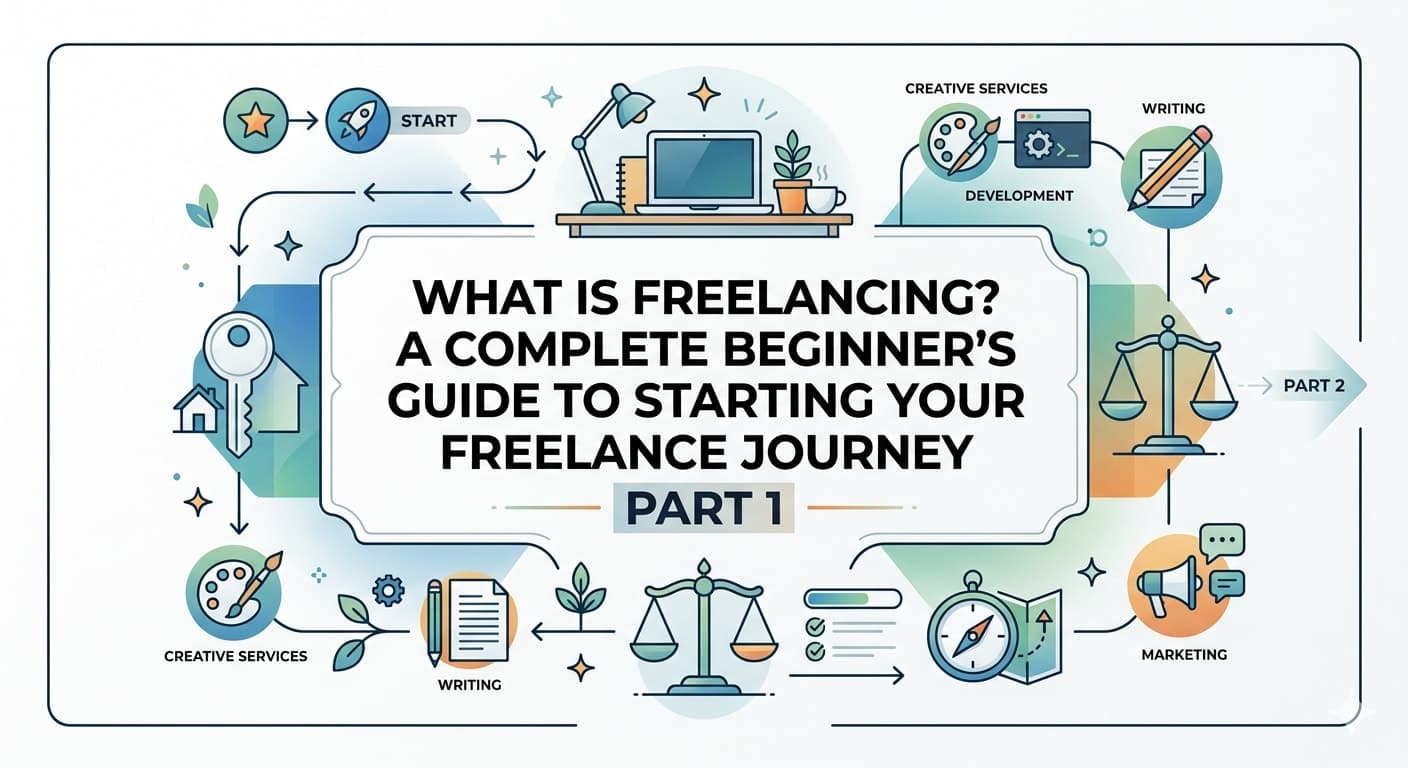
What Is Freelancing? A Complete Beginner's Guide to Starting Your Freelance Journey
Part 2
Skills You Can Sell as a Freelancer (Even With No Experience)
Part 3
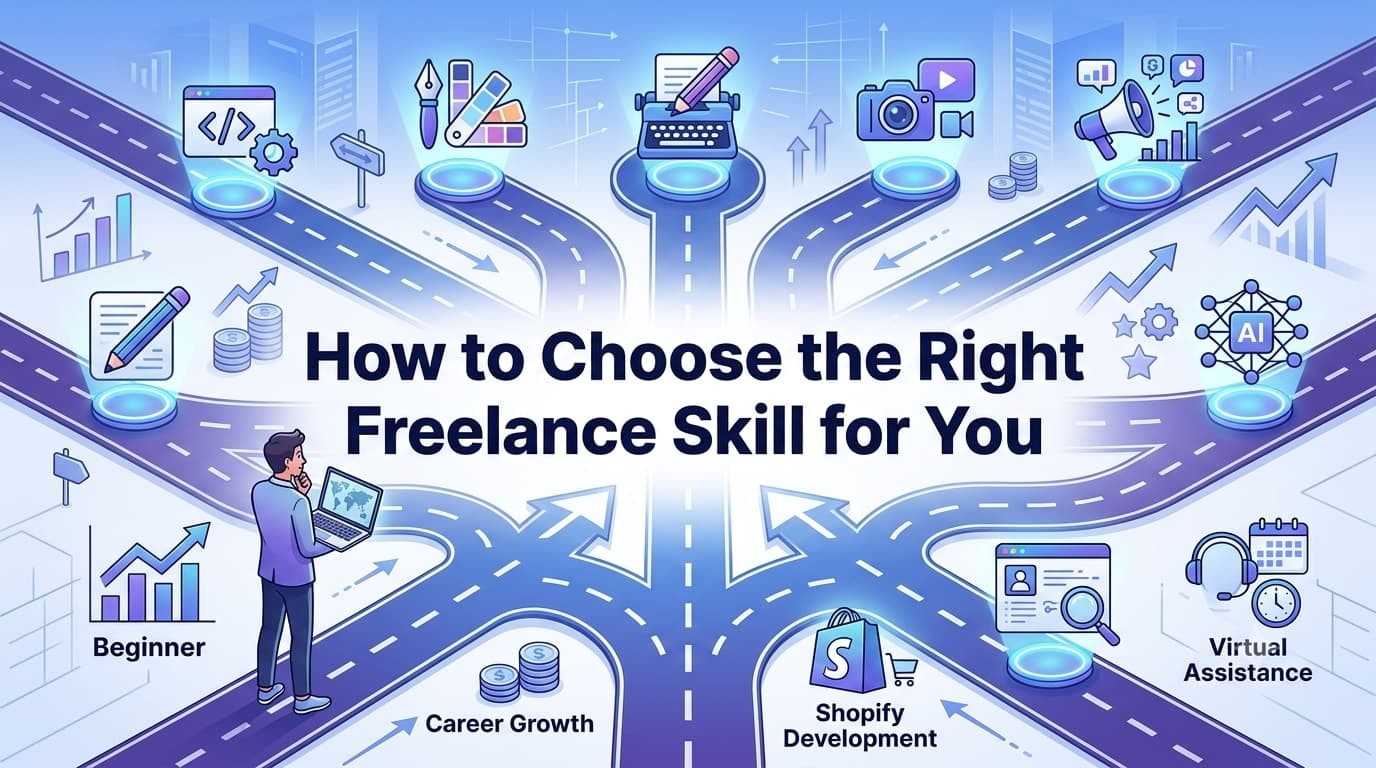
How to Choose the Right Freelance Skill for You
Part 4
Best Freelancing Platforms for Beginners
Part 5
How to Create a Winning Fiverr Profile
Part 6
How to Create an Upwork Profile That Gets Approved
Part 7
How to Get Your First Freelance Client
Part 8
How to Build Your Portfolio Without Clients
Part 9
How Much Should Beginners Charge?
Part 10
Common Freelancing Mistakes Beginners Make
Part 11
How to Communicate With Clients Professionally
Part 12
How to Avoid Freelancing Scams
Part 13
How to Get Repeat Clients
Part 14
How to Scale From Freelancer to Agency
Part 15
Passive Income Ideas for Freelancers
Part 16
AI Tools Every Freelancer Should Use
Part 17
How to Manage Time as a Freelancer
Part 18
Freelancer Taxes and Payments Explained
Part 19
How to Build a Personal Brand as a Freelancer
Part 20
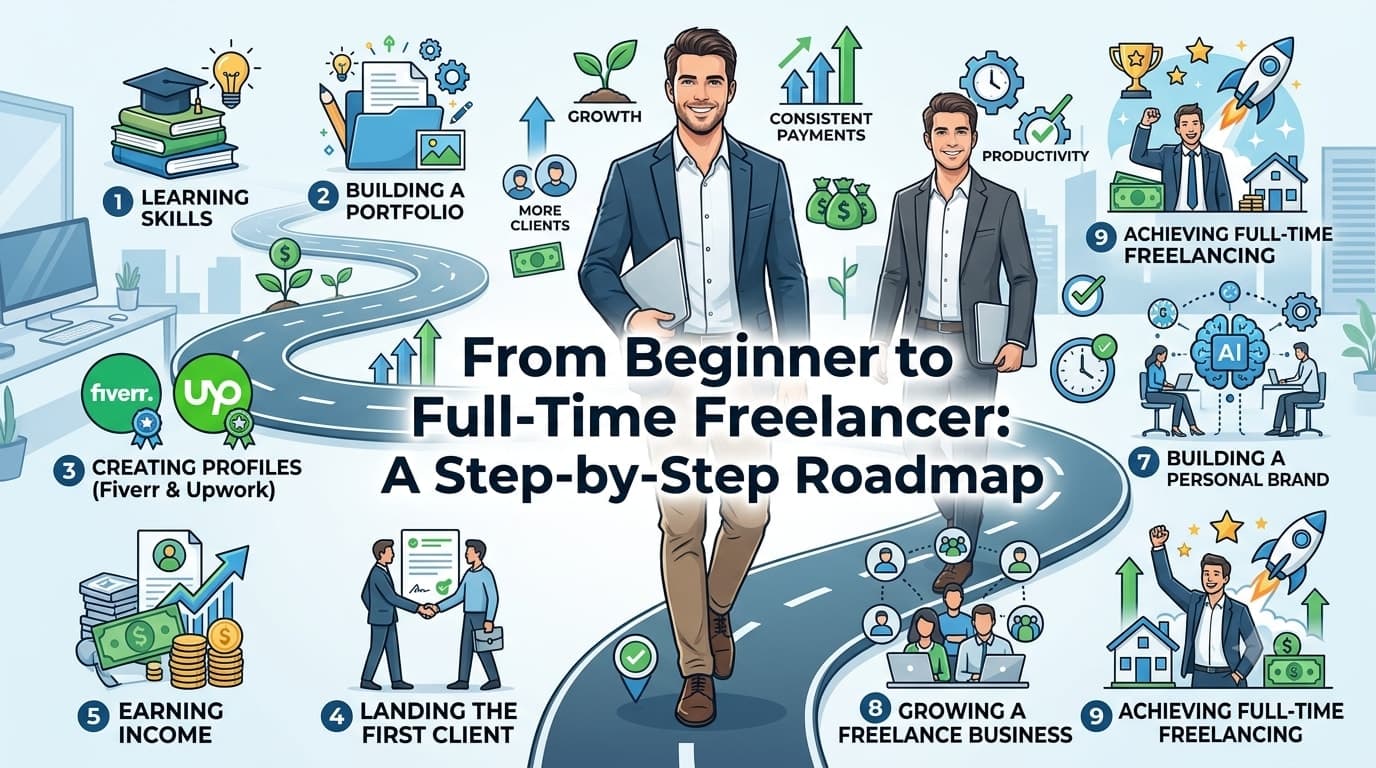
From Beginner to Full-Time Freelancer: A Step-by-Step Roadmap
Congratulations!
If you've been following this series from the beginning, you've already taken an important step toward building a successful freelance career.
Throughout these guides, we've covered everything from understanding what freelancing is to finding clients, setting your prices, managing your time, avoiding scams, handling payments, building your personal brand, and much more.
But knowing these concepts is only the beginning.
Success in freelancing comes from taking consistent action.
Many people spend months watching videos, reading articles, and buying courses without ever sending a proposal or talking to a client.
Others start before they feel "ready," learn through real projects, improve with every client, and eventually build thriving freelance businesses.
The difference isn't talent.
It's consistency.
In this final article, we'll bring everything together into a practical roadmap you can follow—from complete beginner to full-time freelancer.
Whether your goal is earning extra income, replacing your full-time job, or building your own agency one day, this roadmap will help you focus on the right priorities at each stage.
Let's map out your journey.
Your Freelancing Journey Starts With One Step
Every successful freelancer started exactly where you are now.
No clients.
No reviews.
No testimonials.
No portfolio.
No reputation.
No steady income.
The difference is that they kept moving forward, one step at a time.
Don't compare your beginning to someone else's tenth year.
Instead, focus on completing the next milestone.
Over time, these small achievements become a successful freelance career.
Stage 1: Learn a Valuable Skill
Everything begins with a skill that solves real problems.
Examples include:
Web Development
Mobile App Development
UI/UX Design
Graphic Design
Video Editing
Copywriting
Digital Marketing
SEO
Virtual Assistance
AI Automation
Data Analysis
Choose one skill and commit to improving it every week.
Avoid jumping between multiple skills before becoming confident in one.
Related Reading: Start with Part 2: Skills You Can Sell as a Freelancer (Even With No Experience) if you're still deciding what service to offer.
Stage 2: Build Your Portfolio
Clients don't just want to know what you've learned.
They want proof that you can solve problems.
Your portfolio should demonstrate:
Projects.
Case studies.
Before-and-after examples.
Personal work.
Open-source contributions.
Mock client projects.
Remember:
You don't need paid clients to build an impressive portfolio.
Related Reading: See Part 8: How to Build Your Portfolio Without Clients for practical portfolio ideas.
Stage 3: Create Professional Profiles
Now that you have a valuable skill and a portfolio, it's time to make yourself visible to potential clients.
Create professional profiles on platforms where clients actively search for freelancers.
Some of the most popular options include:
Fiverr
Upwork
LinkedIn
Personal Website
GitHub (for developers)
Behance or Dribbble (for designers)
Make sure every profile includes:
A professional photo
A clear headline
A compelling introduction
Your skills
Portfolio samples
Contact information (where appropriate)
Remember, your profile is often the first impression a client has of you.
Related Reading:
Stage 4: Land Your First Client
Getting your first client is often the hardest milestone.
The good news?
It gets easier after that.
Start by:
Applying for beginner-friendly projects.
Writing personalized proposals.
Keeping your prices competitive.
Responding quickly to messages.
Following project instructions carefully.
Don't become discouraged if your first few proposals are rejected.
Most successful freelancers were rejected many times before landing their first project.
Persistence matters more than perfection.
Related Reading: Part 7: How to Get Your First Freelance Client
Stage 5: Deliver Outstanding Work
Landing a client is only the beginning.
Your goal is to exceed expectations.
Always:
Meet deadlines.
Communicate regularly.
Ask questions when requirements are unclear.
Test your work thoroughly.
Be honest about delays or challenges.
Deliver clean, professional work.
Happy clients often become repeat clients.
Even better—they refer you to others.
Your reputation starts with your first project.
Stage 6: Build Your Reputation
After completing a few successful projects, focus on building trust.
Ways to strengthen your reputation include:
Collect positive reviews.
Request testimonials.
Showcase completed projects.
Keep your portfolio updated.
Share client success stories (with permission).
Publish helpful content online.
Every satisfied client makes finding the next one a little easier.
Stage 7: Increase Your Rates
Many beginners make the mistake of keeping the same low rates forever.
Instead, increase your rates gradually as you gain:
Experience.
Positive reviews.
Better skills.
Higher demand.
More confidence.
Stronger results.
Clients are often willing to pay more when they trust that you'll deliver quality work.
Don't be afraid to charge based on the value you provide rather than simply the hours you work.
Related Reading: Part 9: How Much Should Beginners Charge?
Stage 8: Build Your Personal Brand
Eventually, you want clients to find you instead of constantly searching for them.
That's where your personal brand becomes valuable.
Continue improving:
Your LinkedIn profile.
Your personal website.
Your portfolio.
Your blog.
Your social media presence.
Your professional network.
Share your knowledge regularly.
Teach what you're learning.
Help others solve problems.
Over time, your reputation becomes one of your strongest marketing tools.
Related Reading: Part 19: How to Build a Personal Brand as a Freelancer
Stage 9: Transition to Full-Time Freelancing
Leaving a full-time job or relying entirely on freelancing is a significant decision.
Before making the transition, consider whether you have:
Consistent monthly income.
Multiple active clients.
Emergency savings.
Reliable project flow.
Confidence in finding new work.
Many freelancers transition gradually by freelancing part-time before making it their primary source of income.
Taking a planned approach can reduce financial stress and give you greater stability.
Stage 10: Keep Learning and Growing
Freelancing isn't a destination—it's a continuous journey.
Technology, client expectations, and industries evolve every year.
Successful freelancers keep learning.
Continue to:
Learn new skills.
Follow industry trends.
Improve your communication.
Explore AI tools.
Build new portfolio projects.
Expand your network.
Invest in courses and certifications.
The freelancers who continue learning are usually the ones who continue growing.
Celebrate Every Milestone
It's easy to focus only on the next goal.
Instead, take time to appreciate how far you've come.
Celebrate milestones such as:
Your first portfolio project.
Your first proposal.
Your first client.
Your first positive review.
Your first $100.
Your first recurring client.
Your first referral.
Your first month replacing your salary.
Small wins create momentum.
Momentum creates confidence.
Confidence builds long-term success.
Freelancer Success Checklist
As you move from beginner to full-time freelancer, use this checklist to measure your progress.
Learning & Skills
✔ I have chosen a freelance skill that solves real problems.
✔ I continue learning and improving my skills.
✔ I stay updated with industry trends and new tools.
Portfolio
✔ I have a professional portfolio.
✔ My portfolio includes real or personal projects.
✔ I regularly update my portfolio with new work.
Professional Profiles
✔ My Fiverr profile is complete.
✔ My Upwork profile is professional.
✔ My LinkedIn profile is updated.
✔ I have a personal website (or plan to build one).
Finding Clients
✔ I send personalized proposals.
✔ I communicate professionally.
✔ I respond to clients on time.
✔ I actively search for new opportunities.
Reputation
✔ I deliver quality work.
✔ I meet deadlines.
✔ I ask for testimonials.
✔ I maintain long-term relationships with clients.
Business Growth
✔ I understand pricing.
✔ I manage my finances.
✔ I keep learning.
✔ I invest in my personal brand.
✔ I use AI and productivity tools effectively.
✔ I have a long-term career plan.
Key Takeaways
Congratulations!
You've now completed the Learn Freelancing for Beginners series.
Let's summarize the most important lessons from this journey.
Learn one valuable skill before trying to master everything.
Build a portfolio—even without paid clients.
Create professional profiles that build trust.
Apply consistently instead of waiting for the "perfect" opportunity.
Deliver excellent work and communicate professionally.
Build long-term relationships with clients.
Increase your rates as your experience grows.
Invest in your personal brand.
Manage your finances responsibly.
Keep learning because freelancing is constantly evolving.
Success comes from consistent action—not perfection.
Remember:
You don't need to know everything before you start.
You simply need to take the next step.
Frequently Asked Questions
How long does it take to become a full-time freelancer?
It varies for everyone. Some freelancers transition within a few months, while others take a year or longer. Your timeline depends on your skills, consistency, niche, and the effort you invest in finding and retaining clients.
Can I freelance while working a full-time job?
Yes. Many successful freelancers begin by working evenings or weekends while keeping their full-time job. This allows them to gain experience, build a portfolio, and develop a steady client base before making the transition.
Should I learn multiple skills?
It's usually better to become highly skilled in one area first. Once you've established yourself, you can expand your services or learn complementary skills that add value for your clients.
What should I do if I don't get clients immediately?
Stay consistent. Improve your portfolio, refine your proposals, build your personal brand, and continue learning. Most freelancers experience rejection before securing their first client. Persistence is often the difference between those who succeed and those who quit.
Is freelancing a good long-term career?
Yes. Freelancing offers flexibility, global opportunities, and the potential to build a sustainable business. With continuous learning, professionalism, and strong client relationships, many freelancers enjoy long and successful careers.
Continue Learning
📘 Learn Freelancing for Beginners – Complete Series
Congratulations on reaching the end of the series!
Here's your complete roadmap:
✅ Part 1: What Is Freelancing? A Complete Beginner's Guide
✅ Part 2: Skills You Can Sell as a Freelancer (Even With No Experience)
✅ Part 3: How to Choose the Right Freelance Skill for You
✅ Part 4: Best Freelancing Platforms for Beginners
✅ Part 5: How to Create a Winning Fiverr Profile
✅ Part 6: How to Create an Upwork Profile That Gets Approved
✅ Part 7: How to Get Your First Freelance Client
✅ Part 8: How to Build Your Portfolio Without Clients
✅ Part 9: How Much Should Beginners Charge?
✅ Part 10: Common Freelancing Mistakes Beginners Make
✅ Part 11: How to Communicate With Clients Professionally
✅ Part 12: How to Avoid Freelancing Scams
✅ Part 13: How to Get Repeat Clients
✅ Part 14: How to Scale From Freelancer to Agency
✅ Part 15: Passive Income Ideas for Freelancers
✅ Part 16: AI Tools Every Freelancer Should Use
✅ Part 17: How to Manage Time as a Freelancer
✅ Part 18: Freelancer Taxes and Payments Explained
✅ Part 19: How to Build a Personal Brand as a Freelancer
✅ Part 20: From Beginner to Full-Time Freelancer: A Step-by-Step Roadmap (Current Article)
🎉 You've completed the entire beginner roadmap!
Final Thoughts
When we started this series, the goal wasn't simply to teach freelancing—it was to give you a practical roadmap that you could follow with confidence.
By now, you understand far more than just how to create a profile or send a proposal. You know how to choose the right skill, build a portfolio, find clients, price your services, communicate professionally, avoid common mistakes, manage your finances, strengthen your personal brand, and continue growing your career.
Remember, every successful freelancer you admire once started exactly where you are today. They faced uncertainty, rejection, and challenges, but they kept learning, improving, and moving forward.
The most important step isn't finishing this series—it's applying what you've learned.
Start with one project. Send one proposal. Publish one portfolio piece. Share one post on LinkedIn. Improve a little every week.
Small, consistent actions compound over time, and those actions are what transform beginners into full-time freelancers.
Thank you for joining us on this journey. We hope this series has helped you build a strong foundation for your freelance career, and we look forward to sharing more advanced freelancing content with you in the future.
We wish you every success in your freelancing journey. 🚀
Need Help? Let's Connect!
Your learning doesn't end here.
📩 Stay Connected
Subscribe to our blog to receive new articles on advanced freelancing, AI tools, productivity, web development, career growth, and business strategies. You'll be the first to know when the next series begins.
💬 Have a Question?
If you have any questions about freelancing, career growth, client management, or any topic covered in this series, visit our Contact Us page and send us your query.
We personally read every message and do our best to answer all genuine questions.
🤝 Follow Us on LinkedIn
Connect with us on LinkedIn for practical freelancing advice, AI insights, web development tips, and updates on new articles and future learning series.
If this 20-part series helped you, consider sharing it with a friend, colleague, or aspiring freelancer. It could be the resource that helps someone take their very first step toward building a successful freelance career.
🎉 Congratulations!
You have completed the Learn Freelancing for Beginners series.
Now it's time to stop reading…
…and start building.
Good luck on your freelancing journey!