Part 1
What Is Freelancing? A Complete Beginner's Guide to Starting Your Freelance Journey
Part 2
Skills You Can Sell as a Freelancer (Even With No Experience)
Part 3
How to Choose the Right Freelance Skill for You
Part 4
Best Freelancing Platforms for Beginners
Part 5
How to Create a Winning Fiverr Profile
Part 6
How to Create an Upwork Profile That Gets Approved
Part 7
How to Get Your First Freelance Client
Part 8
How to Build Your Portfolio Without Clients
Part 9
How Much Should Beginners Charge?
Part 10
Common Freelancing Mistakes Beginners Make
Part 11
How to Communicate With Clients Professionally
Part 12
How to Avoid Freelancing Scams
Part 13
How to Get Repeat Clients
Part 14
How to Scale From Freelancer to Agency
Part 15
Passive Income Ideas for Freelancers
Part 16
AI Tools Every Freelancer Should Use
Part 17
How to Manage Time as a Freelancer
Part 18
Freelancer Taxes and Payments Explained
Part 19
How to Build a Personal Brand as a Freelancer
Part 20
From Beginner to Full-Time Freelancer: A Step-by-Step Roadmap
Welcome back to the Learn Freelancing for Beginners series!
Many beginners believe freelancing is only about having technical skills.
While your skills are important, they're only one part of the equation.
Think about this:
If two freelancers have similar experience and charge similar rates, why does one consistently attract better clients while the other struggles to get noticed?
In many cases, the difference is personal branding.
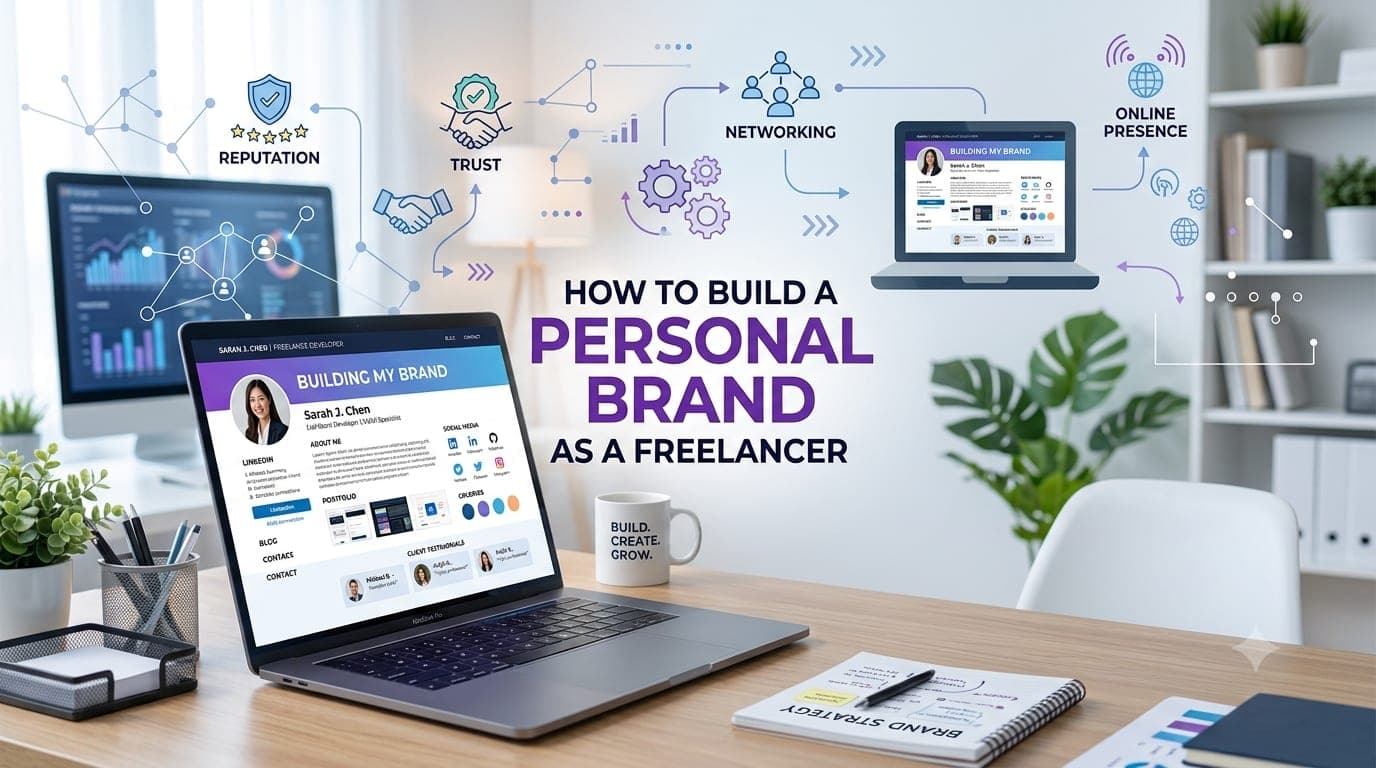
Your personal brand is how people perceive you online. It includes your expertise, reputation, communication style, portfolio, online presence, and the value you consistently provide.
A strong personal brand helps you:
Build trust before speaking with a client.
Stand out in a competitive marketplace.
Attract better-quality projects.
Charge higher rates with confidence.
Receive referrals and repeat business.
Create long-term career opportunities.
The best part?
You don't need thousands of followers or a large marketing budget to build a strong personal brand.
By consistently showcasing your expertise, sharing valuable content, and maintaining a professional online presence, you can position yourself as someone clients want to work with.
In this guide, you'll learn practical strategies for building a personal brand that supports your freelance career and helps you attract opportunities naturally.
Let's get started.
What Is Personal Branding?
Your personal brand is the professional image people associate with you.
It isn't just your logo, website, or profile picture.
Your brand is built through everything you do online, including:
Your portfolio.
Your LinkedIn profile.
Your freelance marketplace profiles.
Your website.
Your communication with clients.
Your social media presence.
The quality of your work.
Testimonials and reviews.
The content you share.
Every interaction contributes to how potential clients perceive you.
Whether you actively build your brand or not, you already have one. The goal is to shape it intentionally so it reflects your expertise and professionalism.
Why Personal Branding Matters
Clients often research freelancers before hiring them.
They may:
Visit your LinkedIn profile.
Browse your portfolio.
Read testimonials.
Search your name online.
Look at your recent posts.
Check your website.
A strong personal brand creates confidence before the first conversation even begins.
Some of the biggest benefits include:
Greater visibility.
Increased trust.
More inbound inquiries.
Better client relationships.
Higher perceived value.
Long-term career growth.
Instead of constantly chasing clients, your personal brand can help attract them to you.
Define Your Niche
One of the biggest mistakes beginners make is trying to be everything for everyone.
You may think offering every possible service increases your chances of getting hired, but it often has the opposite effect.
Clients prefer specialists over generalists.
For example, instead of saying:
"I'm a web developer."
You could say:
"I build fast, SEO-friendly Next.js websites for startups and small businesses."
Or instead of:
"I'm a graphic designer."
You could say:
"I create modern brand identities and social media graphics for SaaS companies."
A clear niche helps clients immediately understand:
What you do.
Who you help.
Why you're the right person for the job.
You can always expand your services later, but starting with a focused niche makes it easier to build authority.
Create a Professional Online Presence
When potential clients search for your name, what do they find?
Your online presence is often your first impression.
Aim for consistency across all your professional profiles.
This includes:
A professional profile photo.
A clear headline.
A concise bio.
Updated contact information.
Consistent branding.
Links to your portfolio or website.
Even if you use multiple platforms, your messaging should remain consistent so clients immediately recognize your expertise.
Build a Strong Portfolio
Your portfolio is one of the strongest trust signals you can have.
Instead of simply showing screenshots, explain:
The client's problem.
Your solution.
Technologies or tools used.
Challenges you overcame.
The final outcome.
Whenever possible, include measurable results.
For example:
Increased website speed.
Improved SEO performance.
Higher conversion rates.
Reduced loading time.
Better user experience.
Case studies often build more credibility than simply displaying finished work.
If you haven't worked with clients yet, don't worry.
Create personal projects, redesign existing websites, build demo applications, or contribute to open-source projects.
Related Reading: If you're still building your portfolio, read Part 8: How to Build Your Portfolio Without Clients for practical ideas on creating portfolio-worthy projects before landing your first client.
Build Your Personal Website
While freelance platforms are valuable, having your own website gives you complete control over your online presence.
A personal website can include:
About Me
Services
Portfolio
Testimonials
Blog
Contact page
It also gives potential clients a professional place to learn more about you.
If you regularly publish useful content, your website can attract organic traffic through search engines and generate client inquiries over time.
Optimize Your LinkedIn Profile
LinkedIn is one of the most effective platforms for building a professional reputation.
Make sure your profile includes:
A professional photo.
A compelling headline.
A well-written About section.
Your experience.
Skills.
Featured projects.
Certifications.
Recommendations.
Keep your profile updated as you complete new projects or learn new skills.
An active LinkedIn profile can help you connect with clients, recruiters, and other professionals in your industry.
Share Valuable Content
One of the fastest ways to build trust is by sharing knowledge.
You don't need to post every day.
Consistency is more important than frequency.
Some ideas include:
Lessons from recent projects.
Industry trends.
Productivity tips.
AI tools you use.
Common client questions.
Tutorials.
Behind-the-scenes insights.
Case studies.
Mistakes you've learned from.
Helpful content demonstrates your expertise before a client even contacts you.
Be Consistent
Building a personal brand doesn't happen overnight.
Clients begin recognizing professionals who consistently:
Deliver quality work.
Share useful knowledge.
Communicate professionally.
Keep learning.
Maintain an active online presence.
Even posting once or twice a week consistently is more effective than posting every day for one month and then disappearing.
Consistency builds familiarity, and familiarity builds trust.
Build Authority Through Education
Teaching others is one of the best ways to establish yourself as an expert.
You can educate your audience by creating:
Blog articles.
LinkedIn posts.
Short videos.
Tutorials.
YouTube content.
Social media tips.
Free resources.
Project breakdowns.
When people repeatedly learn something valuable from you, they're more likely to remember your name when they need your services.
Showcase Your Expertise, Not Just Your Services
Instead of constantly saying:
"Hire me."
Show what you're capable of.
Examples include:
Before-and-after project examples.
Performance improvements.
UI redesigns.
Coding tips.
Marketing strategies.
Problem-solving examples.
Demonstrating your expertise is far more persuasive than simply listing your services.
Network With the Right People
Building a personal brand isn't only about creating content—it's also about building meaningful professional relationships.
Networking can introduce you to:
Potential clients.
Other freelancers.
Business owners.
Recruiters.
Industry experts.
Collaboration opportunities.
Networking doesn't mean sending random messages asking for work.
Instead:
Join relevant communities.
Participate in discussions.
Offer helpful advice.
Congratulate others on their achievements.
Share your experiences.
Support other professionals.
People are more likely to remember those who consistently provide value.
Build Trust Through Professionalism
Your personal brand isn't defined only by what you post online.
It's also shaped by how you work.
Clients remember freelancers who:
Communicate clearly.
Meet deadlines.
Deliver quality work.
Respond professionally.
Accept feedback positively.
Solve problems proactively.
Every successful project strengthens your reputation.
Over time, satisfied clients become your biggest advocates.
Ask for Testimonials
A satisfied client is often happy to leave a testimonial—you simply need to ask.
After successfully completing a project, politely request feedback.
Good testimonials should ideally mention:
The client's problem.
Your solution.
Communication experience.
Work quality.
Timely delivery.
Overall satisfaction.
Display testimonials on:
Your website.
Portfolio.
LinkedIn profile.
Freelance marketplace profiles.
Social proof helps future clients feel more confident about hiring you.
Encourage Referrals
One happy client can lead to several new opportunities.
If you've delivered excellent work and built a positive relationship, don't hesitate to ask whether they know someone else who might benefit from your services.
Referrals often result in:
Higher-quality clients.
Faster hiring decisions.
Less competition.
Greater trust from the start.
Many successful freelancers grow their business primarily through referrals rather than constant job applications.
Keep Learning and Improving
Your personal brand should grow alongside your skills.
Continue investing in yourself by:
Learning new technologies.
Earning certifications.
Reading industry blogs.
Following experts.
Experimenting with new tools.
Building side projects.
As your expertise evolves, update your portfolio, website, LinkedIn profile, and freelance profiles to reflect your latest achievements.
A personal brand should never remain static.
Common Personal Branding Mistakes
Building a strong brand takes time, but certain mistakes can slow your progress.
Avoid these common pitfalls.
Trying to Appeal to Everyone
If your message is too broad, it becomes difficult for potential clients to understand what you actually specialize in.
A focused niche makes your brand more memorable.
Being Inconsistent
Posting regularly for a few weeks and then disappearing for months makes it difficult to build recognition.
Consistency builds familiarity, and familiarity builds trust.
Ignoring Your Online Profiles
Outdated portfolios, incomplete LinkedIn profiles, or broken website links can create a poor first impression.
Review your profiles regularly and keep them updated.
Focusing Only on Selling
If every post says "Hire me," people are likely to lose interest.
Instead, educate, inspire, solve problems, and share useful insights.
When you consistently provide value, clients naturally become interested in your services.
Copying Other Freelancers
Learning from successful professionals is valuable.
Copying their style, content, or messaging isn't.
Your unique experiences, personality, and expertise are what make your personal brand authentic.
Personal Branding Checklist
Use this checklist to strengthen your personal brand.
✔ Define a clear niche.
✔ Create a professional online presence.
✔ Build a strong portfolio.
✔ Keep your LinkedIn profile updated.
✔ Create your own website.
✔ Share valuable content consistently.
✔ Network with industry professionals.
✔ Collect testimonials from happy clients.
✔ Ask for referrals when appropriate.
✔ Continue learning and improving your skills.
Key Takeaways
A strong personal brand helps clients trust you before they even contact you.
Here are the biggest lessons from this guide:
Define a clear niche and target audience.
Maintain a professional and consistent online presence.
Build a portfolio that demonstrates real value.
Optimize your LinkedIn profile and personal website.
Share educational content regularly.
Network genuinely with other professionals.
Collect testimonials and encourage referrals.
Stay consistent and continue improving your skills.
Remember, your personal brand is built through hundreds of small actions over time—not one viral post.
Frequently Asked Questions
Do I need a personal website to build a personal brand?
A personal website isn't mandatory, but it gives you complete control over your online presence and provides a professional place to showcase your portfolio, services, and contact information.
Which social media platform is best for freelancers?
It depends on your industry, but LinkedIn is one of the best platforms for building a professional reputation and connecting with potential clients and recruiters.
How long does it take to build a personal brand?
Personal branding is a long-term process. Consistently sharing valuable content, delivering quality work, and maintaining a professional online presence can produce meaningful results over several months.
Should beginners create content?
Absolutely. You don't need to be an industry expert to share what you're learning. Documenting your journey, sharing lessons, and providing helpful tips can help establish credibility over time.
Can personal branding help me get more clients?
Yes. A strong personal brand builds trust, increases your visibility, and makes it easier for potential clients to understand your expertise. This can lead to more inquiries, referrals, and long-term opportunities.
Continue Learning
📘 Learn Freelancing for Beginners Series
✅ Part 1: What Is Freelancing? A Complete Beginner's Guide
✅ Part 2: Skills You Can Sell as a Freelancer (Even With No Experience)
✅ Part 3: How to Choose the Right Freelance Skill for You
✅ Part 4: Best Freelancing Platforms for Beginners
✅ Part 5: How to Create a Winning Fiverr Profile
✅ Part 6: How to Create an Upwork Profile That Gets Approved
✅ Part 7: How to Get Your First Freelance Client
✅ Part 8: How to Build Your Portfolio Without Clients
✅ Part 9: How Much Should Beginners Charge?
✅ Part 10: Common Freelancing Mistakes Beginners Make
✅ Part 11: How to Communicate With Clients Professionally
✅ Part 12: How to Avoid Freelancing Scams
✅ Part 13: How to Get Repeat Clients
✅ Part 14: How to Scale From Freelancer to Agency
✅ Part 15: Passive Income Ideas for Freelancers
✅ Part 16: AI Tools Every Freelancer Should Use
✅ Part 17: How to Manage Time as a Freelancer
✅ Part 18: Freelancer Taxes and Payments Explained
Final Thoughts
Your personal brand is one of the few assets that continues to grow as your freelance career progresses. While skills help you deliver excellent work, your reputation, visibility, and credibility are what often determine whether clients choose you over someone else.
You don't need thousands of followers or years of experience to build a strong brand. Start by being consistent, sharing what you know, delivering high-quality work, and maintaining a professional online presence. Over time, these small efforts build trust and make it easier for clients to find and remember you.
Most importantly, stay authentic. Your unique experiences, communication style, and approach to solving problems are what differentiate you from other freelancers. Focus on helping people, keep learning, and let your work speak for itself.
In the final part of this series, we'll bring everything together with a Freelancing Success Roadmap, helping you review your progress, set long-term goals, and plan the next stage of your freelance journey.
Need Help? Let's Connect!
Your freelancing journey doesn't have to be a solo one. Whether you're building your personal brand, improving your portfolio, growing your LinkedIn presence, or attracting better clients, we're here to help.
📩 Subscribe to Stay Updated
Don't miss the final article in our Learn Freelancing for Beginners series.
Subscribe to our blog and be the first to receive new articles, practical freelancing tips, AI insights, and step-by-step guides delivered straight to your inbox.
💬 Have a Question? We'd Love to Help
If you have any questions or need guidance about freelancing, personal branding, LinkedIn, portfolios, or growing your freelance business, simply visit our Contact Us page and send us your query.
We personally read every message and do our best to respond to all genuine questions.
🤝 Connect With Us on LinkedIn
Follow us on LinkedIn for regular freelancing tips, AI insights, web development articles, career advice, and updates whenever a new article is published.
If you found this article helpful, consider sharing it with fellow freelancers, students, and professionals who want to build a strong personal brand and attract better opportunities.